Motto: Steady . . . On

The 10th was originally known as the 3rd Battalion Combat Team, a unit activated on 29 April 1949. The 3rd BCT was re-designated the 10th BCT (Motorized) in January 1950 to reflect its new role as the Philippines’ only armored battalion. It had a company of 29 American-made medium tanks (M4 Sherman) and another company of light tanks (M5 Stuart).
The 10th was chosen as the first PEFTOK battalion for Korea because the Philippine Army believed it admirably suited to the “slugging type” of conventional warfare in Korea. The battalion motto, “Steady . . . On,” referred to the tank crew practice of shouting the phrase, “Steady . . . On!” when aiming their tank cannon and machine guns at a target. Col. Mariano Azurin, the first commanding officer of the 10th, was a tank man trained at the US Army armor school in Kentucky.
Press coverage of the 10th was so extensive Filipinos knew the oldest soldier in the battalion was 54 years old while the youngest was just 18. Daily English-language newspapers such as the Evening News, The Manila Times and The Philippine Herald assigned war correspondents to cover the battalion’s exploits in Korea.
 |
| The 10th BCT led by Col Mariano Azurin parades at the Rizal Stadium before deploying to Korea. |
At 9:00 a.m. on 2 September 1950, 60,000 Filipinos crammed the Rizal Stadium in Manila to watch the 10th BCT parade prior to its departure for Korea on 16 September.
Upon its arrival in Korea on 19 September, the battalion’s strength stood at some 1,400 officers and men. Its “teeth” consisted of three rifle companies, a medium tank company, a reconnaissance company equipped with light tanks and a field artillery battery.
Both tank companies arrived in Korea without tanks since the Americans had agreed to provide new tanks to replace the battalion’s 17 M4 Shermans and one M10 “Wolverine” tank destroyer sent to Korea prior to the battalion’s departure. These tanks, however, were destroyed during the UNC retreat to the Pusan Perimeter before the battalion got to use them in combat.
 |
| Men of the 10th first meet the South Koreans, mostly children and orphans. |
 |
| 10th BCT tank crew and their M24 "Chaffee" light tank mounting a 75 mm gun. |
The 10th spent its first two weeks “in country” acclimatizing to the terrain, continuing unit training interrupted by its abrupt departure and taking in weapons and supplies. Bivouacked initially in the town of Miryang, 35 miles north of Pusan, the 10th was moved to other towns farther north and joined the war in the city of Waegwan. The battalion was first attached to the US 25th Infantry Division.
 |
| 10th BCT Commanding Officers: Col Mariano Azurin; Col Dionisio Ojeda |
Guerilla fighters
Preceded by its reputation as a battle hardened anti-guerilla unit, the battalion was first given the mission of hunting down North Korean guerillas interdicting the main supply route (MSR) of the United Nations Command (UNC). The battalion’s first area of operations, based on Waegwan, covered more than 800 square miles and harbored about 3,000 guerillas.
 |
| Filipino warrior in Korea armed with an M1 Garand semi-automatic rifle. |
North Korean guerillas were mainly regular soldiers of the North Korean People’s Army (NKPA), well armed and with an excellent knowledge of the rugged terrain. These soldiers had taken to the hills either because it was their mission, or because they had decided to fight on after being cut off from their units by the victorious UNC advance into North Korea following the Inch’on Landings on September 15.
 |
| Anti-guerilla patrol prepares to move out. |
+in+the+ruins+of+Seoul,+1951.+Vil.JPG) |
| War Correspondent Johnny Villasanta (right) with Col Mariano Aguilar of the 20th BCT in the ruins of Seoul, 1950. |
On 31 October, advanced elements of the 10th crossed the 38th Parallel dividing North and South Korea, an event reported to the Filipino public by War Correspondent Johnny Villasanta, who accompanied the advanced unit. Villasanta was the first Filipino war correspondent in Korea.
The next day, the rest of the battalion moved further north to Pyongyang, capital of North Korea, and was given the mission of securing the MSR from Kaesong to Pyongyang and clearing the area of guerillas.
At the outskirts of the town of Miudong, the battalion fought its first pitched battle, this against a North Korean battalion, killing 50 while losing one man. "The Battle of Miudong” was the first battle fought, and won, by the Philippines on foreign soil.
In a bold raid on November 5, a five-man commando team led by Lt. Venancio “Bonny” Serrano captured 77 North Korean soldiers and sympathizers plus arms and ammunition. The "gung ho" Lt. Serrano was to earn a reputation for fearlessness that made him one of the most colorful Filipino soldiers in the Korean War.
 |
| Wounded 10th BCT trooper after the Battle of Miudong. |
Bitter winter
The brutal winter of 1950 was the coldest in 200 years with temperatures well below zero. Despite this incredible cold, the 10th was without the heavy winter clothing that would allow its men to survive and fight in this arctic environment. This supply omission strained relations between Col. Azurin and the commanding officer of the American regiment to which the 10th was then attached. Azurin protested forcefully and was relieved of his command.
 |
| The incredibly brave Lt. Bonny Serrano |
Plunging southward, the CPV re-took Pyongyang and Seoul within the year. The 10th retreated with the UNC in this harsh winter of defeat that men of the US Army derisively called “The Big Bug Out.” The US defeat at the Battle of the Yalu ended its “Home for Christmas” campaign, and forced the US Army into the longest continual retreat in its history. As a rearguard unit, the 10th was one of the last UNC units to re-cross the 38th Parallel “the wrong way.”
 |
| The 10th BCT covers the retreat of the US Army after the communist Chinese intervened. |
The battalion spent its first Christmas in Korea in the town of Suwon along the Han River. When the American-led UNC launched its counterattack in February 1951, the 10th went on the offensive as part of the US 3rd Infantry Division (Rock of the Marne), a unit that fought in Europe in both World Wars.
By this time, the CPV was spent, suffering heavy losses in men and materiel. It began a deliberate withdrawal towards its bases in North Korea to refit and replace casualties. In March and April, the 10th was in continuous action, capturing hill after hill from the Chinese. Now a front line fighting unit, the 10th pushed northward towards the 38th Parallel defeating Chinese counterattacks along the way.
By 14 April, the hard-driving 10th was the northernmost of all UNC units. The men were exhausted after close to two months of non-stop fighting but were in high morale. On the 17th, the 10th was stood down and reverted to the reserve of the US 65th Infantry Regiment (the famous “Borinqueneers”) composed of Puerto Ricans. The battalion was down to some 900 men. Most of its casualties, however, were non-battle in nature.
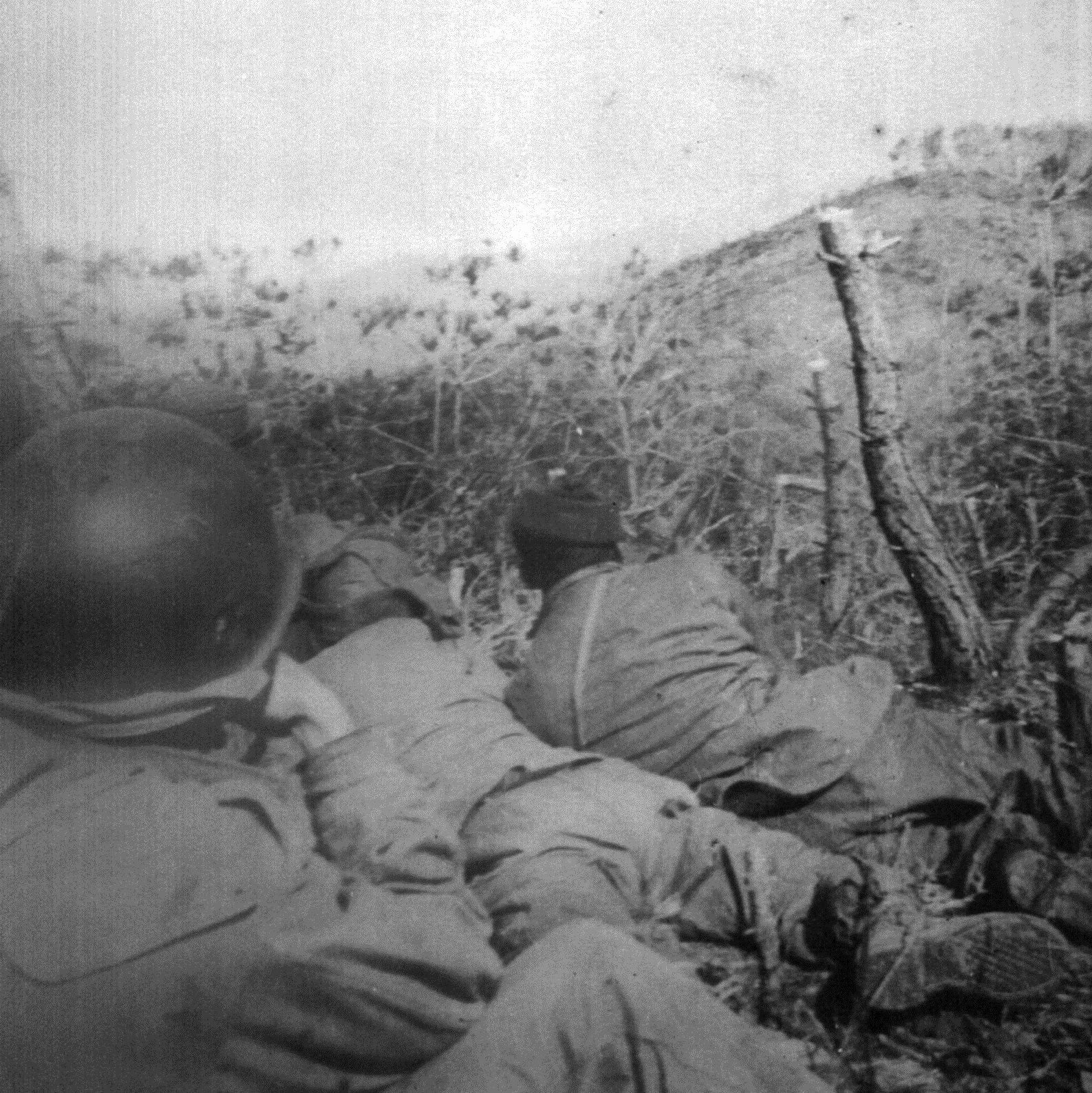 |
| Men of the 10th prepare to attack a communist held hill. |
The Battle of Yuldong
What we Filipinos commemorate as The Battle of Yuldong (formerly spelled Yultong) was part of the biggest battle of the Korean War. The CPV and NKPA had massed over 400,000 men for their “Great Spring Offensive” against the advancing UNC. It was the largest communist offensive of the Korean War.
UNC strategy at the time involved establishing “lines” across the breadth of the Korean peninsula. These lines were used as springboards for attack or as sanctuaries in defense. This strategy was made possible by the narrowness of the Korean peninsula, which is less than 200 miles across at its widest. A series of these lines, which ran west to east, were built at intervals across the peninsula.
The northernmost of these lines, called Line Kansas, was located about 10 to 14 miles north of the 38th Parallel. Line Kansas had two northward bulges called Lines Wyoming and Utah, making both lines the northernmost UNC positions and logical targets for any counterattack.
The 10th was rushed to reinforce Line Utah on 22 April amid positive signs of an imminent communist counterattack. The 10th defended a three-mile sector of the 40-mile long UNC front line in western Korea located above the Imjin River. It was still attached to the US 3rd Infantry Division.
 |
| Last photo of Battle of Yuldong heroes Capt Conrado Yap and 1Lt Jose Artiaga. |
Arriving at the front on the morning of 22 April, the battalion quickly took over the forward positions of the 1st Battalion, US 65th Infantry Regiment, part of the US 3rd ID. The Filipinos began to improve their positions, digging more foxholes, siting machine guns and stringing more barbed wire. The 10th held a portion of the left shoulder of Line Utah astride Route 33, a major highway connecting Seoul to the city of Chorwon further north.
The Puerto Ricans of the US 65th Infantry Regiment, probably the best US infantry unit on the western front, dug in one of their battalion's on the 10th’s left flank. To the Puerto Rican’s left stood the British 29th Independent Infantry Brigade Group consisting of the Belgian battalion, the 1st Battalion Royal Ulster Rifles, the 1st Battalion Northumberland Fusiliers and the 1st Battalion of The Gloucestershire Regiment. These units were within the sector held by the 3rd US ID. Defending the left of the British was the ROK 1st Division, which also held the city of Munsan-ni, the western anchor of the UNC line.
A battalion of the Turkish Brigade, part of the US 25th Infantry Division, held the line to the right of the 10th. The battalions of this division were strung out to the right of the Turks as were the battalions of the US 24th Infantry Division. The US 3rd, 25th and 24th Infantry Divisions constituted the US I Corps defending the western sector of the UNC line. The US IX Corps held the right of US I Corps.
Opposite the 10th were the CPV 31st, 34th, 35th and 181st Divisions that were part of the CPV 12th Army. This army, which at full strength numbered some 40,000 men, formed part of the CPV III Army Group along with the CPV 15th and 60th Armies. More than 400,000 “volunteers” in 18 armies and 50,000 NKPA regulars were massed for their “Great Spring Offensive.” This formidable horde was supported by the heaviest concentration of Communist artillery yet seen in the war.
 |
EPIC HEROISM. Some 900 Filipinos (identified as Fil 10 in the circle) repulse the attack of the communist Chinese 12th Army at the Battle of Yuldong while its UNC allies are quickly overrun by the tremendous Chinese "Great Spring Offensive."
|
The Filipinos set-up an Intelligence Outpost (IOP) some five kilometers forward of their front line to give advance warning of the impending Chinese attack. At about 8:30 pm, the IOP reported large numbers of Chinese leaving their positions and heading towards the battalion. The IOP then withdrew into the safety of the battalion’s positions. The Chinese reported by the IOP belonged to one of the four divisions comprising the CPV 12th Army that would become the battalion’s antagonists at Yuldong.
At five minutes past midnight on 23 April, Sunday, the entire 10th BCT took the full impact of the Chinese assault. Baker Company defending the right was the first to be hit. After hammering the rest of the battalion’s positions with artillery, mortar and automatic weapons fire the Chinese charged the Filipino line to the noise of bugles, whistles and gongs.
They ran into a wall of fire thrown up by the 10th, hundreds of Chinese falling to the defenders. The battlefield was in chaos. Although heavily outnumbered, the men of Able, Tank, Recon and Baker Companies in the front line resisted furiously backed by their howitzers and mortars. The battalion’s front line remained unbroken.
Steady On!
Disaster, however, struck the UNC battalions on the 10th's flanks. The Chinese quickly overran the Turkish battalion, exposing the 10th's right, and began to encircle Baker Company defending that flank. The Puerto Rican battalion holding the 10th's left flank staggered under the massive assault, and while two companies withdrew fighting, the rest of the Puerto Ricans prevented the Chinese from rupturing their lines.
Amid a rapidly collapsing western front, the Filipinos and the Puerto Ricans held firm, denying the Chinese the quick victory they needed to crush the UNC.
Farther left, the British stood up to the first Chinese assaults. After an initial repulse at the hands of the Gloucestershire battalion on the left of the British position, however, the Chinese forced a crossing of the Imjin River at Korangpo-ri. The Chinese then drove hard inland, surrounding the Gloucestershire battalion at its Solma-ri position and outflanking the other battalions of the brigade, which were forced back to escape encirclement.
Many of the UNC battalions holding the 10th's left and right flanks were in retreat by the morning of 23 April. With its flanks "in the air," the 10th stood alone in a salient almost surrounded by a torrent of assaulting Chinese. The most threatening penetration, however, occurred further east in the vicinity of the city of Hwach'on. The CPV routed the South Korean 6th Division in the US IX Corps area and poured southward threatening to cut off UNC units north of the Imjin River.
 |
| Filipino artillery hammers the communists. |
The Chinese continued to attack the 10th BCT and their persistence, despite terrible losses, being rewarded when one of their regiments overran the lone Tank Company platoon of just 17 men posted on a ridge (not a bridge) overlooking Yuldong village.
The Chinese were immediately counterattacked and driven off the hill by the heavily outnumbered men of Tank Company (which didn't have any tanks). Capt. Conrado Yap, commanding officer of the Tank Company, was killed in this counterattack. His men had, however, retrieved the bodies of Lt. Jose Artiaga (Yap's closest friend) and the men of Lt. Artiaga's shattered and badly understrength 1st Platoon.
Lt. Artiaga received the Distinguished Service Cross for leading his grossly outnumbered men in the most dramatic saga of the Battle of Yuldong. Capt. Yap was posthumously awarded the Medal of Valor, the Philippines' highest award for heroism, while the Tank Company received a unit citation from the US Eighth Army for this valiant action.
At dawn on 23 April, the 10th supported by two of its M24 light tanks counterattacked the surprised Chinese, who were regrouping following the murderous night battle, killing many and driving the survivors out of its positions.
Lt. Alfredo Cayton, the battalion’s supply officer, led a supply convoy that brought ammunition and food the following morning. At one of the forward positions, Lt. Cayton looked out across a smoke shrouded but eerily silent battlefield littered with what appeared to be large numbers of brown rags as far as his eyes could see. He turned to the .50 cal. machine gun crew defending that sector and asked what those rags were.
“Dead Reds,” the Filipino gunner curtly replied.
Lt. Cayton wept at the massive slaughter. It was the first time he had seen so many dead men in one place. Despite their being the enemy, the Chinese were still human beings, he told me.
The US 3rd ID ordered the battalion to withdraw, a disengagement the 10th accomplished while under constant attack from the Chinese and without other UNC units to cover its withdrawal.
There was, however, no rest for the exhausted 10th. Barely rested from its terrifying ordeal and with its men dog-tired, the battalion on the 24th was thrown into a tank-led British counterattack to free the trapped Gloucestershire battalion.
The Filipinos attacked with their M24 light tanks, one of which was destroyed by the Chinese. More Filipinos died. The 10th fought to within 1,500 meters of the trapped battalion, the closest approach by any of the UNC units involved in the rescue attempt, but were hamstrung by unfavorable terrain that allowed no room for maneuver.
Standing firm against the British, Filipino, American, Puerto Rican and Belgian attackers, the Chinese eventually destroyed the Gloucestershire (or Gloster) battalion after a fierce four-day struggle. Only 50 of 750 Glosters escaped death or capture. The British fought to the last bullet against three Chinese divisions of the CPV 63rd Army.
 |
| The 10th BCT fights its way forward to the trapped British Gloucestershire battalion. |
The Battle of Yuldong cost the 10th BCT 10 killed, 26 wounded and 14 men missing in action. Five more Filipinos were killed in the vain attempt to rescue the Gloucestershire battalion and others were wounded. These light casualties in a major offensive testified to the courage and fighting skill of the men in the front line. CPV dead littered the battalion's positions. The 10th emerged from its first great battle intact and undefeated.
The UNC lost over 7,000 men during the first day of the Chinese counterattack. Balanced against this were CPV losses totaling more than 70,000, according to the UNC. The entire UNC line, however, fell back before the Chinese attack to a prepared defense line above Seoul. Withdrawing to this line brought the 10th more losses.
On 26 April, a Chinese regiment surrounded and captured an entire Filipino platoon of 40 men in a sudden attack. The confused fighting during the nerve-wracking withdrawal saw many examples of heroism from the ranks. Staff Sgt. Nicolas Mahusay gave his life in a heroic attack on enemy mortars that had pinned down the battalion. He was cut down by enemy fire after silencing the mortars and allowing the battalion to escape,
The small village of Yuldong in the mountains of North Korea became the scene of the bloodiest battle fought by a PEFTOK battalion in the Korean War. The Philippines commemorates the Battle of Yuldong every year to honor all Filipinos who served in Korea.
Peace and war
During the UN counterattack in June 1951, the 10th was once more in the fight, battering Chinese rearguards impeding its advance. The 10th led the UNC advance to the Taejo River where it killed 65 Chinese and secured the vital Chorwon Reservoir. The battalion then reverted to the reserve of the US 3rd Infantry Division. The commanding officer of the 3rd ID, Maj. Gen. Robert “Shorty” Soule, said the 10th was the best Allied unit in his division. The brilliant battle fought by the battalion at Yuldong earned it the nickname, “The Fighting Filipinos.”
The repulse of the Chinese Spring Offensive in April and the second phase of this offensive in May brought the combatants to the peace table. Armistice negotiations to end the war began 10 July 1951 in Kaesong, a village in North Korea. With the beginning of peace talks, the war of movement and big battles came to an end and was replaced by savage small unit actions for strategic terrain.
The CPV used the lull to reinforce and bring up its heavy artillery and anti-aircraft guns. As a result, artillery barrages by both the Chinese and the UNC were heavier than those in World Wars 1 and 2. Half of the Americans killed during the Korea War died during the truce negotiations.
 |
| Cemetery at Busan, Korea for the fallen heroes of the 10th BCT. The bodies of these men, and all the other Filipino warriors that gave their lives in Korea, were later repatriated to the Philippines. |
Back Home
The 20th BCT, which was to replace the 10th, took over the Filipino front line on 6 September. On 27 September, the 10th was finally pulled out of the war. The Fighting Tenth, as it was now called, arrived in Manila on 23 October to a rapturous heroes welcome.
In its 398 days in the Korean War, the battalion lost 63 men killed, 145 wounded and 58 missing-in-action, for a total of 266 battle casualties, the highest casualty toll among all five PEFTOK BCTs. On 5 May 1952, the battalion’s dead returned to the Philippines, with many buried at the Libingan ng mga Bayani.
 |
| Fallen heroes of the 10th BCT return home. |


I hope that you will be able to publish a book about PEFTOK. Such will surely fill the gap in our documented history. I'm also hoping that someone will also write a book about PHILCAGV. Best regards and more power.
ReplyDeleteI have been trying to write a book about our country's role in the Korean War and PEFTOK for the past 12 years.
DeleteI have asked three Presidents of the Philippines to support me; have asked assistance from South Korea and even from the Chinese.
No one wants to spend money for a book about the Philippines' role in the Korean War.
How much do you need? No promises; but, I might be able to help.
DeleteThank you very much for your offer. We can email each other about this. My email is art.villasanta@gmail.com
DeleteSir when I was young I remember my uncle telling his Korean War stories. Sadly I forgot everything about it. Thanks to your article, I'll ask him again about his side of the story.
Deletehave u thought of making a story base from this and putting on a big screen? Now that I'm into war and history movies. I would love to see this on the big screen. I always thought of we were there. We had a part in the age of war. But why then nobody is showing this... Always abt the spaniards. Although there are still great stories that haven't been told yet. But still we were part of this world event and it's like nobody knew. Maybe if some of us knew what. We were back then. It would help lift are heads and not just kept on bowing down to them.
By the way sir. Any news of your book?
DeleteHi. What BCT was your uncle with? I can't see anyone making a movie about the Philippines' role in the Korean War. As for my book, I can;t get anyone to support it. Love your country always.
DeleteI saw a book entitled the Fighting 10th,owned by Andy De Guzman,it was loaded with pictures,i hope i can get hold of it once again,it was richly portrayed in pictures,andy even told me that bonny serrano ran when andy and co. were captured,andy became pow and was released thru prisoner exchange.
DeleteFor the sacrifice and very good examples of bravery, patriotism our fathers have shown in WW2 and in the Korean war , I wonder what they would feel if they knew of the dismal state our country is in right now ...
ReplyDeleteGil
Many of our Korean War veterans that I have interviewed are dismayed by our country's fall from power. We were once Southeast Asia's greatest economic and political power.
DeleteOne veteran told me that he could die content knowing he lived in a time when the Philippines was a Great Nation. He died a few years ago.
We have a chance to reclaim that Greatness. It must begin in each of our patriot hearts.
Hope VIVA or GMA make movie on this story. Its on first kind.
ReplyDeleteIt would be magnificent if someone could do this movie. But we all know our movie industry is all but dead.
DeleteThe only movies we see are romantic comedies,"tween" melodramas and "dramas" na panay sampalan, sigawan at kawalanghiyaan. Ganito be ang Pilipino ngayon?
Nasaan napunta ang tunay na Pilipino na tumalo sa mga Hapon, Intsik at Koreano?
Sana nga may producer na maglakas loob na gumawa ng pelikula tungkol sa mga bayaning Pilipino noong Digmaang Korea.
Sana nga . . .
Sir Art, do you have a resource containing all the names of our soldiers who fought in Korea? Ang namayapang lolo ko po kasi, ngalang Conrado Santos, ay lumaban daw ho noon sa Korea according sa kwento ng pinsan at tatay ko. Nagretiro ho sya sa sandatahan as major. Gusto ko lamang po malaman kasi kung anong unit sya nakasapi dahil di na rin po matandaan ng pamilya ko ang mga detalye. Maraming salamat po.
ReplyDeleteThe names of all the Philippine Army soldiers who served under PEFTOK can be found at the Museum of the Philippine-Korean war Memorial Hall at Bayani Road at the Libingan ng mga Bayani.
DeleteThe names are printed on tall glass panels located inside the Museum. You can visit the Museum Monday to Friday and take photos.
Masaya ako na nakita ko ang article na ito. Matagal ko na ka sina hinahanap ang History ng Korean War & btw isa sa mga veterans na nabanggit ay lolo ko (Lt. Venancio “Bonny” Serrano)kaya tuwang-tuwa ako nang mabasako ang pangngalan niya.
ReplyDeleteI hope that There will Be tv Documentary or movie film for this so that our fellow men will know about the contribution of the Filipinos in The Korean War
Matapang talaga ang lolo mo. Di takot lumaban. Astig talaga. Lahat ng nakausap kong mga miyembro ng 10th BCT ay sumasangayon dito.
ReplyDeleteBe very proud na tunay na Bayaning Pilipino ang lolo mo. Huwag mo siyang kalilimutan pati ng ang mga kapwa niyang bayani sa PEFTOK.
Sir Villanueva, Salamat sa Blog niyo, ako ay isang anak ng mga mandirigma, Ang mga ninuno namin ang isa sa mga lumaban sa mga Español, ang naalala lang namin ay yung kwento ng Lolo ko nung World War II, Gusto niya sumali nun sa Korean War ang problema lang noon eh nadischarge siya sa Serbisyo dahil sa sakit niya nakuha nung World War II, Salamat dito nalaman ko ang Full History ng 10th BCT, kami nalang sa Pamilya namin ang nagmamahal sa bansa namin, ang tatay ko dati ring sundalo sa Scout Ranger unit siya, same as my brother nag graduate siya sa PMA nung 2006, ngayon nasa Airforce na siya lumalaban sa mga Rebelde at terorista, as for me; lalaban ako sa bansa if nilusob tayo, hindi ko iiwan ang bansa ko kahit mamatay ako rito, lahat kami ay mga "Patriots", dati ako nung CAT ko nung high school, sumasaludo ako sa flag, ang mga classmate ko (mga rich kid's) eh tinatawanan ako, kaya nga sabi ko sa sarili ko... nag-iisa nalang kami. Anyway po salamat po sa blog niyo. More Power po.
ReplyDeleteAng mga bayaning tulad ninyo ang tanging pagasa ng Inang Bayan. Di tayo uunlad o magwawagi sa digmaan kung walang mga Pilipinong handang isakripisyo ang sariling interes o buhay man para sa kabutihan ng nakararami. Kakaunti lamang ang handang ibigay ang lahat para sa Inang Bayan. Mag Bayani kayo.
DeleteThank you this info , Mr. Art Villansanta. You are your self a hero , a gem of our country for never ceasing to tell and retell the heroism of our Filipino soldiers. My father was also a veteran in Korean and Vietnam wars. As a child then The words !0th BCT is often mentioned in the house. We kept collection of Papa's pictures in Korea, just like what you have published here. Unfortunately we weren't able save some when our old house was razed by fire in the neighborhood years ago. Although to give tribute to my father, I wrote my Masteral thesis about the PHILCAGV at UST . I have always thought of how gallant Filipino Soldiers of the past, and feel aghast of the image the present military hierarchy as they display of immoralities and corruption galore. I am proud to call myself a daughter of true hero.. A salute to PEFTOK and the PHILCAGV. I salute you Sir.
ReplyDeleteI salute your father for serving our country in two wars and for being a Hero in the truest sense of that word. I salute you for cherishing and keeping alive his memory and those of his comrades who fought for our country. I might write a history of PHILCAGV and if this project pushes through, can I read your thesis? I graduated from UST. God bless you and yours.
Deletei read a book in the Pangasinan Provincial Library about the "Fighting Tenth" during the Korean conflict. The library still have the copy of it.- Randy Sison
ReplyDeleteHi. I hope you enjoyed the book. The pictures are fantastic. I also hope you enjoyed reading this website. God bless you and yours.
ReplyDeletesan pwede makabili ng book po?
ReplyDeleteHi. Wala nang mabibili ng kopya ng The Fighting Tenth. More than 60 years na out of print ito. May kopya yata ang National Library at ang Library ng Philippine Army sa Camp Aguinaldo.
ReplyDeleteI am the proud daughter of the late Judge Derico G. Nacion, a Korean Veteran. He passed away in 1989 at the age of 58... My father used to tell us stories about his war experience and PEFTOK. We never had interest in his stories since we were then soooo young :(... as I am about to visit SoKor, it would be nice to see any place that would remind me of my father's chivalry... any place in Korea that would make me once again proud of my late, brave, veteran father... your suggestion, Mr Art Villasanta will be greatly appreciated... Thank you! - Miriam Nacion-Caronan
ReplyDeleteHi. I'm glad you'll be visiting Korea. Make certain to visit the War Memorial of Korea in Seoul. Look for the brass plaque with the names of our heroes who died in the Korean War. There is an exhibit honring the Philippines' role in the Korean War on one of the higher floors. I think its on the third floor but you'll find out. You must visit the DMZ. There are tours to the DMZ but I don't know if the tours are being offered because of the tensions with North Korea. I don't know your father's BCT so I can't refer you to any speciic place but the locations where all our BCTs fought were outside Seoul. Be sure to shop in Seoul, which is shopping paradise for girls. Take all the photos and video you can and email me a few. Have a wonderful time.
ReplyDeleteThank you.. I think my father was with the 14th BCT... again, thank you, Mr. Villasanta!
DeleteI was able to see the War Memorial in Seoul and our english speaking Korean tour guide was so accommodating when i informed her that I am a daughter of a PEFTOK Filipino veteran. she kept on saying "thank you, to your father who helped us gain our freedom which we are now enjoyin" ... :) where can i send the pictures :)
DeleteMy grandfather is a korean war veteran. He is in his 80's now and living in pampanga. He was with the 10th bct. In great respect for him, I am also in the service as a military nurse. In great hope, should heroes like him be recognized by the govt
ReplyDeleteIf you have time, please visit the PEFTOK Korean War Memorial Hall along Bayani Road inside Fort Bonifacio. The Memorial Hall has a PEFTOK MUSEUM with the history of the Philippines' role in the Korean War and memorabilia donated by our Korean War veterans. Perhaps your lolo wants to donate some of his Korean War items to the Museum. I salute your service as a military nurse. Love your country always.
Deletekindly make a list of names of soldier who was in the 10th bct company. and make it known for them, their relatives knows that these are the brave men of peftok.
Deletethese brave soldiers should be recognized in this blog flatform, for them to be remembered.
DeleteHello Mr. Art Villasanta thank you so much for these blog on the heroism of our Filipino soldiers during the Korean war, actually my father was one of the soldiers he's one of 10th BCT company, we even have the sticker of their motto before "Steady On" and I remember I always accompanied him in attending their Peftok gathering at Camp Aguinaldo before, but when he died I wasn't able to attend their yearly gathering. I don't know if they still have this gathering because the last time I attended was way back 2004 or 2005 I think? Everytime I attended that gathering I feel so proud to have a father who didn't hesitate to serve his country by helping other country for the sake of freedom. When ever his friends from other BCT's there's a different respect or honor given to this 10th BCT after reading this and seeing all the pictures now I understand. My father when he was still alive whenever we are watching movies about war he will share his experiences in that Korean war. He was very young that time and his parents doesn't have any idea that he joined the army and will be going to Korean war. Now I can clearly imagine his stories especially this battle at Yultong. Praying that in God's time there will be film producer who will have that interest to make a movie from this Korean war, where our father/forefathers fought for freedom in a foreign land. God bless you! Thank you so much po! God willing I will visit that Peftok Museum in Fort Bonifacio. My father's name is Alfonso S. Saquilayan
DeleteKindly write about the lone filipino soldier who singlehandedly destroyed about a dozen tanks.
ReplyDeleteMy Grandfather was with 10th bct, he has a medal but i don't know what kind of medal it is..
ReplyDeletemalamang UN Medal yun
DeleteThis comment has been removed by a blog administrator.
ReplyDeleteMr. Villasanta I wrote on your blog but for some reason it was not posted. Anyway I congratulate you on your blog which is very informative and I appreciate what you have done. Was also very happily surprised seeing the photo of your father with my dad, the late Col. Mariano V. Aguilar of the 20th BCT. They have a photo with a damaged building at the back which by the way is the City Hall of Seoul. I was very fortunate of having the opportunity of visiting Korea in 2013 and seeing the old City Hall. It reminded me so much of that photo and now I know whom my dad was with. Again maraming salamat po!
ReplyDeleteIt's always pleasant hearing from the children of our PEFTOK heroes. God bless you and yours.
ReplyDeleteSir Art... I hope you'll be able to publish a book about PEFTOK in the Korean War... maybe some fundraising and donations from your readers can help... I recommend Kickstarter.. I wouldn't mind donating some money just to make this happen. :)
ReplyDeleteThank you for the suggestion and your offer to help. I have been trying to do this for over 10 years and frankly, I am tired of failure. Let me think it over. Stay in touch.
Deletehttps://youtu.be/r6ogJwvGSNU
DeleteThey should have added you to the credits.
I know my lolo was a PEFTOK, can you help me where I can find his unit? his name is Alfonso Damasen (Sr).. thanks
ReplyDeleteHi Albert, Auntie Vina here. Si Papa was with the 20th BCT, I just found out also lately after I went over Your lolo's files after your lola's death . malapit ka langnaman jan sa Bayani Rd pasyalan mo yung museum ng PEFTOK andun name nya. Am planning to donate his war helmet after this quarantine. I hope to see you then, pasyalan ko kayo jan.
DeleteHi. You can call the office of the PEFTOK Veterans Association, Inc. at 911-25-79 and ask about yor lolo. They can help you.
ReplyDeleteSalute to you Sir Art Villasanta, I am so grateful for your articles Re PEFTOK history, makes me feel so proud not only of my father Msgt. Alfonso S. Damasen Sr. from the 20th BCT, but also all of those PEFTOK veterans who helped Korea gain their freedom from invaders. You sir are so patriotic and really generous of your time and effort in letting everyone know of the gallantry of those soldiers. Kahanga hanga ka sir, and I'm sad of your plight with no support on a book man lang sana. But I'm sure those soldiers are giving you their big salutes too even from the afterlife because of your kindness in telling their story even when nobody wants to listen, except maybe us, the families they left behind. I am posting this now 4 years after this post of yours hoping you could still read it and know that you are so admired for your work. Thank you and may you be blessed more.
DeleteMy grandfather is one of them too i'm proud of him!
ReplyDeleteHis name is Alfonso Saquilayan.. His unit is 10th BCT Charlie company...i'm happy too because i love KPOP ahaha.... Thank you for th info!
Wow! Thanks. :) my grandfather was in 10th BCT his name is Manuel Garcia.. but sad to say he died last jan 2013.
ReplyDeleteHe was an active member of peftok. I'm really proud of my grandfather :)
This comment has been removed by the author.
ReplyDeleteThis comment has been removed by the author.
DeleteThis comment has been removed by the author.
DeleteProud ako na naging apo ng isang bayani at world war 2 veterans and korean war veterans.....at 10bct batallion commander....na si Gen.Ojeda.....i Salute to all Filipino Veteran Soldier...Mabuhay!!
ReplyDeleteAn uncle of mine was in the 10th BCT,.... don't know if he ever served in the Korean War though,....
ReplyDeleteHi, my father told me that my grandfather is a medic in 10th Bct. Can you confirm if there is an Emiliano Micumao in your list? Thank you
ReplyDeleteYou can call the office of the PEFTOK Veterans Association to find out. Their telephone is 911-25-79. Their office is at Camp Emilion Aguinaldo Quezon City.
DeleteHi Frans, Let's visit the PEFTOK museum..��
DeleteEmer Villanoza
Ganda nito sa movie
ReplyDeleteLakas ng K-Pop and Korean Wave dito sa atin. You'd think na because of this, magiging mas interesado Pinoy sa pakikipaglaban natin sa South Korea noong Korean War. Talagang K-Pop lang tayo.
DeleteDoes anyone has a list of names of PEFTOK soldiers. My uncle Anselmo Villablanca is one of them. Please email me at supermannztv@gmail.com Thanks!!
ReplyDeleteYou can visit the PEFTOK Korean War Memorial Hall in Taguig. The names of all our soldiers who served in Korea are printed aon large display panels. You can look for your uncle's name in his BCt.
DeleteDear Mr. Art Villasanta, I posted to your blog a while back but for some reason it did not post. Maybe because I did not have a profile then.
ReplyDeleteThank you for this great article. My father, then Capt. Pedro De Las Alas, was mentioned in your father's book. I recently saw a short Documentary about PEFTOK and I was saddened that your father or your name was not mentioned since I read most of the accounts from your article way before this movie came out. I sicerely hope they do a longer version and hopefully you can contribute to the movie. Respectfully yours, Monette De Las Alas-Maclang
My apologies for not being a better correspondent with you. I am truly the "Forgotten Historian" of The Forgotten War, but I have accepted this. My aims in creating my PEFTOK website were to tell a story no Filipino historian has told; to ensure the gallantry of the brave heroes of PEFTOK lives forever and to fulfill part of a promise to my late father. I promised my dad to write a boon -- a printed book -- but I now realize I will never get to do this because no one cares. I thank you for your wish that I or my dad somehow be credited in any new film but this won't happen. I have only one copy of my dad's book. My aim now is to republish this book if I can. Do whatever you can to ensure the memory of PEFTOK and its brave men -- including your father -- lives one eternally. God bless you and yours.
DeleteEven i am not part of the history, i'm proud to be the part of the unit from 1996 to 2014.. as of today 10th is still shouting its battle cry (STEADY...ON)
ReplyDeleteLast year, 10th showed again its fierceness during Marawi Crisis, the 10th was again part of Marawi Liberation (Kudos to 11 Killed-in-action and 101 Wounded-In-Action).
ReplyDeleteI am always honored when heroes like you write to me. God bless you for your service. I thank you and salute you for having served as a soldier in our Philippine Army. I am saddened by the death of so many brave men of the 10th in Marawi. Thank you for telling me the 10th still shouts "STEADY ON!"
DeleteMy brother in law was a member of this 10th bct PEFTOK ..Uunfortunately he passed already and the only souvenir we had in the house was a framed PEFTOK cloth 30x30inches.. Until now it's still a decoration in our house in #sanvicentegumacaquezon
ReplyDeleteYou might want to visit the PEFTOK Korean War Memorial Hall in Taguig. The PEFTOK museum has the names of all our soldiers who served in Korea from 1950 to 1955.You can take a photo of his name.
DeleteMy brother in law's name ..eduardo allaga .....originally from kiangan , ifugao ...but resided in s#sanvicentegumacaquezon
ReplyDeleteMaremi Canada javinez
Maybe it's time we try a gofundmefor the book if you have not tried it yet sir.
ReplyDeleteThis comment has been removed by a blog administrator.
ReplyDeleteThis comment has been removed by a blog administrator.
ReplyDeleteGOOD MORNING PO SIR ART I AM A SON OF PEPTOK VETERAN 10TH BCT I WOULD LIKE TO KNOW MORE ABOUT PEPTOK ANY BENEFITS FOR THE CHILDREN OF THE VETERAN. I WILL VISIT SEOUL THIS APRIL 27 I WANT TO GO TO THE OFFICE PEPTOK IF THERE'S ANY PLS SEND THE ADDRESS SO THA T I CAN VISIT AND KNOW MORE ABOUT HOW MY FATHER HAVE BEEN WHEN HE WAS IN KOREA. MANY THANKS GOD BLESS PO
ReplyDeleteThis comment has been removed by a blog administrator.
ReplyDeletedo you have a list of names of 10th BCT personnel in peftok
ReplyDeleteMay copy kami ng book entitled The fighting tenth owned by my lolo. He just died last June 27,2019 nakaburol siya ngayon. He was part of the 10th Bct
ReplyDeleteHi! Is it possible for you to reprint that book? Im willing to buy some copies
DeleteSana gumawa Ng movie in honor of our peftok heroes..
ReplyDeleteThe movie "Anak Dalita" by National Artist Lamberto Abellana was about a Sergeant ( proudly wearing his Distinguished Conduct Star) from the 10BCT who came home from the Korean war only to see his mother die. A must see. Available in you tube
ReplyDelete